













Green Miles - Industry Insight
Decarbonising logistics: why infrastructure, not mandates, will determine success
The conversation around logistics decarbonisation is accelerating. Targets are approaching, technologies are maturing, and government is increasingly looking at regulatory levers to drive change.
But across the sector, one message remains consistent: ambition alone will not deliver decarbonisation. Infrastructure will.
From heavy goods vehicles and vans to ports, rail freight and warehousing, logistics businesses are ready to invest and innovate. What they cannot do is operate ahead of the systems and infrastructure that support them.
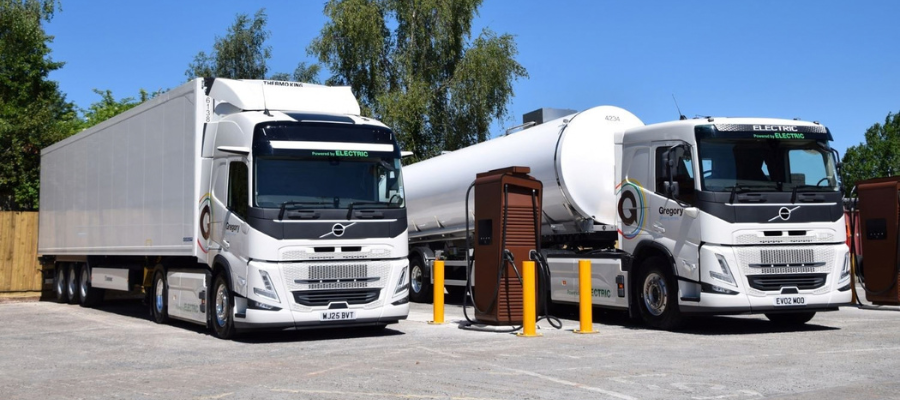
Grid capacity, depot charging, port electrification, rail access and planning certainty are now the critical path. Without these foundations, regulation risks running ahead of operational reality. Essentially, decarbonisation is no longer just a vehicle challenge, it is a system infrastructure challenge.
A whole system transition
Historically, policy has focused heavily on vehicles: cleaner engines, tighter emissions standards, new fuels. But the proposed next phase of decarbonisation is different. It is not about swapping one asset for another, it is about reshaping how freight moves through the entire network.
Operators are already exploring a mix of solutions, whether that be battery electric, low carbon fuel, route optimisation, modal shift and there is strength in diversity. Freight is not homogenous, and neither are the solutions. A technology-neutral approach allows businesses to deploy what works best operationally and commercially for them.
Mandating one pathway too early risks locking the sector into suboptimal or unaffordable outcomes which are not commercially viable.
Infrastructure is the real bottleneck
Across conversations with members, the same barriers come up time and again. Grid connections for depot charging can take years. Ports require significant upgrades to enable electrification and shore power. Rail terminals face capacity constraints and limited access. Planning timelines slow the development of logistics hubs. None of these challenges are within the direct control of operators, yet they determine whether decarbonisation is possible.
Introducing binding targets or mandates before these constraints are addressed risks creating stranded assets, increasing costs for consumers, and undermining competitiveness, particularly compared to European markets that are investing heavily in freight infrastructure.
Getting the sequencing right
I want to make this clear, this is not an argument against ambition. The sector supports the direction of travel and recognises the urgency of decarbonisation. But sequencing matters. A pragmatic framework would prioritise infrastructure readiness before regulation, stable, long-term funding rather than short-term schemes, technology neutrality and commercial competitiveness, supporting SME affordability.
If these foundations are in place, investment will follow naturally. Logistics businesses have consistently shown they are willing to lead when the conditions are right.
Opportunity
Done well, decarbonisation isn’t about ticking boxes, it is an opportunity for more efficient networks, lower operating costs over time, more resilient supply chains and new jobs and skills.
The UK has the chance to build a genuinely integrated, low-carbon logistics system that supports both economic growth and environmental goals. But that requires policy that works with operations, not against them.
The question is not whether the sector will decarbonise. It is how quickly we can remove the practical barriers that stand in its way.
Because in logistics, progress is rarely limited by willingness, it is limited by what the systems and infrastructure enable.
More Green Miles - Industry Insight Articles





Related Pages
Check out more news and media
Discover More

Become a Member
Our membership packages provide you with the tools to keep your operation safe, efficient and compliant.
Learn more

Press Releases
Latest updates, insights, and expert commentary shaping the future of logistics, transport, and supply chains across the UK.
Learn more

Services
Discover the full range of services from Logistics UK, designed to keep your operation safe, efficient, and compliant.
Services

Events
Discover upcoming Logistics UK events designed to bring industry leaders, policymakers, and businesses together.
Events
Stay Ahead. Stay Compliant. Stay Connected.
Join thousands of logistics professionals using Logistics UK to navigate industry change with confidence.
Join Us