













Green Miles - Industry Insight
Who speaks for the 90%? Why decarbonisation policy keeps missing independent operators
By Jamie Sands, Head of Solutions, Welch Group/Founder, TwentyForty.
The decarbonisation debate in UK freight is getting louder. Policy managers, sustainability directors, academics, OEMs, energy companies. Plenty of voices. But something’s missing.
Where are the independents?
The UK has more than 66,000 goods vehicle operator licences. According to the government’s own HGV CO2 consultation, 90% of those operators control a fleet of 10 or fewer vehicles. These aren’t fleets with sustainability departments or innovation budgets. They’re family businesses, owner-drivers, regional specialists. They move most of the freight. And they’re almost entirely absent from the decarbonisation conversation.
I work at one of them. Welch Group is a 90-year-old family logistics operator. Three depots, 150-plus employees, Palletline member. We’re not a startup and we’re not a top-20 fleet. We sit in the middle ground where most of UK freight actually lives.
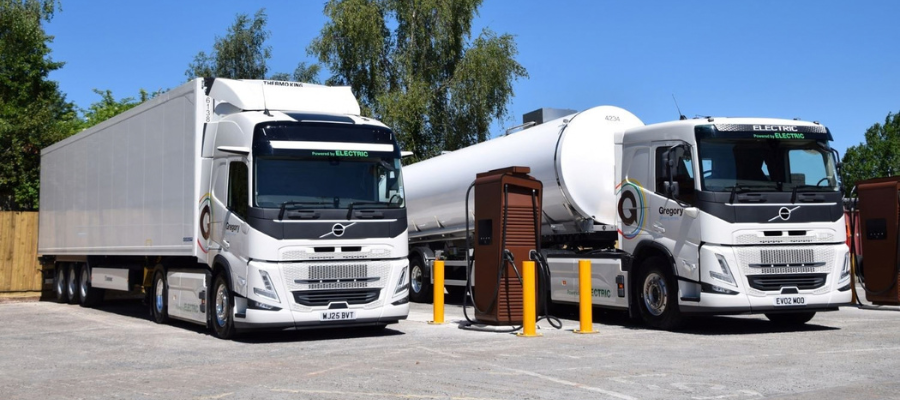
We also operate electric HGVs, contribute to government-funded innovation programmes, and I founded TwentyForty, an operator-led innovation platform focused on freight decarbonisation. I say this not to polish credentials but to make a point: even with that level of engagement, the system is hard to access. For operators without those connections, it’s nearly invisible.
The policy conversation has a structural bias
Look at who shapes decarbonisation policy for road freight. Government consultations attract responses from trade bodies, major fleets, OEMs, energy companies, and a handful of well-resourced SMEs. The rest of the sector, the 90%, doesn’t respond. Not because they don’t care, but because they don’t have the time, the bandwidth, or the belief that it’ll make any difference.
That creates a feedback loop. Policy gets designed around the needs and capabilities of large operators. Funding programmes require consortium structures, match-funding, and reporting frameworks that suit organisations with dedicated bid teams. The resulting interventions work well for the operators who shaped them. Everyone else watches from the sidelines.
ZEHID is a good example. It’s a genuinely important programme and I’m proud that Welch Group is involved through the eFreight2030 consortium. But the process of getting there required months of consortium-building, detailed cost modelling, and significant in-kind resource. That’s not accessible to a haulier running 15 trucks from a single depot in the Midlands. The programme exists to prove the viability of zero emission HGVs for the whole sector. But the operators who most need that proof can’t participate in generating it.
The real barriers aren’t where policy thinks they are
Much of the current debate focuses on vehicle cost, charging infrastructure, and grid capacity. These matter. But for independent operators, the barriers start much earlier.
Most independents don’t have the data to build a credible business case for electrification. Their telematics, if they have any, are locked into OEM platforms with no interoperability. They can’t model duty cycles, energy demand, or depot charging profiles because the data doesn’t flow in a way that supports those decisions. They’re being asked to make the biggest capital investment of their careers based on brochure specs and peer anecdotes.
Then there’s the depot question. Many independent operators lease their sites. They don’t control the electrical infrastructure. Getting a grid connection upgrade through a DNO can take years and cost six figures, assuming the landlord even agrees. The 2-tonne weight derogation is welcome, but it doesn’t solve the fundamental problem of charging a truck you can’t plug in.
And the workforce dimension is barely discussed. Drivers at independent operators don’t have access to corporate training academies. Workshop technicians haven’t been retrained for high-voltage systems. The skills gap is real and it hits smaller businesses hardest, because they can’t afford to take people off the road for weeks at a time.
The transition needs to be accessible, not just available
Whatever your view on the right technology pathway, it’s irrelevant if 90% of the sector can’t get onto any pathway at all.
What independent operators need is actually quite straightforward. They need trusted, impartial guidance on what works for their specific operations. They need data tools that don’t require a PhD or an enterprise software licence. They need funding mechanisms designed for businesses that can’t front-load £50,000 in match funding. And they need to see operators like them doing it successfully, not just reading about trials run by fleets ten times their size.
But no single organisation can fill a structural gap. The sector needs a deliberate effort to bring independent operators into the room. Not as an afterthought. Not as a case study in someone else’s report. As active participants in shaping the policies that will determine their future.
This isn’t about slowing down
I want to be clear: this is not an argument for delay. The climate case for decarbonising freight is settled. The direction of travel is right. But pace without inclusion isn’t progress. It’s a transition that works for some operators and leaves the rest behind.
The government wants to phase out the sale of new diesel HGVs up to 26 tonnes by 2035, and all new diesel HGVs by 2040. Those deadlines only work if the entire market is ready to buy. That means independent operators, not just the top 50 fleets who can afford to go first. And if the whole market is expected to transition, the support structures need to reach the whole market.
Right now, they don’t.
The independent operator community isn’t resistant to change. It’s under-served by the system that’s supposed to enable it. Fixing that isn’t optional. It’s the difference between a decarbonisation strategy that works on paper and one that works on the road.
I’d welcome the conversation. If you’re an independent operator navigating this transition, or if you’re involved in designing the policies and programmes that shape it, get in touch:
Email: Jamie
Web: Welchgroup TwentyForty
More Green Miles - Industry Insight Articles




Related Pages
Check out more news and media
Discover More

Become a Member
Our membership packages provide you with the tools to keep your operation safe, efficient and compliant.
Learn more

Press Releases
Latest updates, insights, and expert commentary shaping the future of logistics, transport, and supply chains across the UK.
Learn more

Services
Discover the full range of services from Logistics UK, designed to keep your operation safe, efficient, and compliant.
Services
Events
Discover upcoming Logistics UK events designed to bring industry leaders, policymakers, and businesses together.
Events
Stay Ahead. Stay Compliant. Stay Connected.
Join thousands of logistics professionals using Logistics UK to navigate industry change with confidence.
Join Us