













Logistics Magazine - News Article
Autumn Budget: Headline announcements affecting logistics
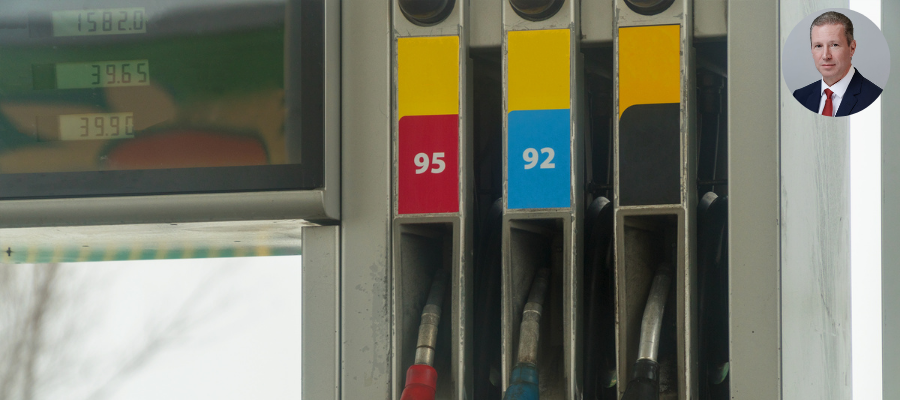
The 5ppl Fuel Duty cut is due to be extended until the end of August 2026, with rates then gradually returning to March 2022 levels by March 2027.
This will mean hundreds of millions in increased taxes for logistics businesses, much of which will be passed onto households and businesses.
An increase of 5ppl on fuel duty would cost the logistics industry approximately an extra £435 million, which would bring the total cost of this tax to £5.9 billion per year.
Changes to salary-sacrificed pension contributions.
Salary-sacrificed pension contributions above an annual £2,000 threshold will no longer be exempt from National Insurance Contributions (NICs) from April 2029.
This means that salary-sacrificed pension contributions above £2,000 will be treated as ordinary employee pension contributions in the tax system and therefore be subject to both employer and employee NICs.
Ordinary employer pension contributions will remain exempt from NICs. The policy results in an increase in NICs which is estimated to raise £4.7 billion in 2029-30 and £2.6 billion in 2030-31. While this will not come into effect until 2029, it will have an impact on employment costs for businesses. Therefore, it will have negative consequences for their employment decisions.
Business rates to increase for properties with a rateable value of above £500,000.
From 1 April 2026, business rates bills in England will be updated to reflect changes in property values since the last revaluation in 2023. Through the high-value multiplier 1,900 distribution warehouses will contribute more. The high-value multiplier will mean raising an additional £270 million from distribution warehouses over the period 2026-27 to 2028-29. The increase in business rates targeted at large warehouses ignores the complex and mixed use of these properties and creates an artificial distinction between online and ‘bricks and mortar’ retail. Support packages will be needed to minimise the impact of these changes and to avoid increased costs being passed on to consumers.
Government has also launched a Call for Evidence seeking input on the impacts of business rates on investment and options to address barriers.
The government will uprate Vehicle Excise Duty for HGVs in line with RPI from 1 April 2026. The government will also uprate the HGV Levy in line with the RPI from 1 April 2026. This is an expected uplift but represents an additional increase for industry to absorb.
New electric vehicle VED from 1 April 2028. The government has been clear that vans and HGVs will be out of scope when the new Electric Vehicle Excise Duty is introduced in April 2028, but it points to a future direction of travel with the move to alternatively fuelled vehicles. Logistics UK welcomes the revenue generated from this new duty supporting road maintenance. Local roads maintenance funding. By 2029-30, the government will commit over £2 billion annually for local authorities to repair, renew and fix potholes on their roads. Road condition is a top priority for members and so increased funding is positive. It is essential that this is directed towards long-term, sustainable improvements, not just short-term fixes. Increasing capacity in the planning system. The government is investing £48 million of additional funding to boost capacity in the planning system. This is a welcome investment, providing it is accompanied by a commitment for planning teams to engage with the logistic sector. Funding to support the construction of the Lower Thames Crossing. The government is committing a further £891 million to complete the publicly funded works for the Lower Thames Crossing, as part of its staged approach, after which the private sector will take forward construction and long-term operation. The certainty provided by this announcement is welcome and should allow the scheme to progress while encouraging private sector partnership in its construction. Supporting the high cost of energy upgrades. Government is introducing a 10-year 100% business rates relief for eligible EV chargepoints and EV-only forecourts, to ensure that they face no business rates liability. Accompanying this, the government will extend the 100% first year allowances (FYAs) for zero emission cars and EV chargepoint infrastructure by a further year. Logistics UK welcomes the 100% relief of business rates for eligible EV chargepoints if logistics operators are included in scope. The government must not disproportionately penalise operators who are decarbonising. Investing in charging infrastructure and reviewing public EV charging costs. Government is investing an additional £100 million in EV charging infrastructure, building on the £400 million of funding announced at the Spending Review 2025. Logistics UK welcomes the announcement for more investment in EV charging infrastructure. However, this support must include provisions for large vans and HGVs, which existing public charging infrastructure does not support. As operators transition to ZEVs there will be increasing reliance on public charging infrastructure and that infrastructure must be fit for purpose. Reviewing the cost of public electric vehicle charging. The government has also said it will review the cost of public electric vehicle charging, looking at the impact of energy prices, wider cost contributors, and options for lowering these costs for consumers. The review will start in Q1 2026 and report by Q3 2026. Logistics UK welcomes the review of public EV charging costs. The transition to ZEVs needs to be cost effective and proportionate for operators. Currently, this is not the case for public charging, severely impacting the total cost of ownership (TCOs) for operators. This disproportionately impacts SMEs who rely more heavily on public charging due to constrained space or leased depots. A review and subsequent lowering of costs for EV charging will support the transition to ZEVs ensuring the TCOs align more closely. De minimus threshold being removed by March 2029. This will increase costs for movement of low value goods, which are often not produced in the UK. This in turn will add to inflationary pressures and will add significant extra traffic to UK customs systems. However, it is welcome that the change is not immediate, with March 2029 the date given for implementation. This allows time for businesses to respond to the consultation and put processes in place to prepare for the change. UK internal market package for Northern Ireland. To boost trade between Northern Ireland and Great Britain, £16.55 million will be provided over three years from 2026-27. This will create a ‘one stop shop’ support service that will help businesses navigate the Windsor Framework. The ‘one-to-shop’ will be helpful to provide guidance for traders and logistics operators in one place. It is encouraging to see UK government recognise and try to address the significant challenges in GB to NI trade. Driver facilities and measures to tackle freight crime, a missed opportunity. Logistics UK had asked government to commit at least £52.5 million of match-funding to improve HGV driver welfare facilities, while expanding eligibility to new providers and making facilities integral to road investment schemes. It is unfortunate that this was not included within the budget along with measures and funding towards tackling organised freight crime
More Logistics Magazine - News Article Articles




Related Pages
Check out more news and media
Discover More

Become a Member
Our membership packages provide you with the tools to keep your operation safe, efficient and compliant.
Learn more

Press Releases
Latest updates, insights, and expert commentary shaping the future of logistics, transport, and supply chains across the UK.
Learn more

Services
Discover the full range of services from Logistics UK, designed to keep your operation safe, efficient, and compliant.
Services

Events
Discover upcoming Logistics UK events designed to bring industry leaders, policymakers, and businesses together.
Events


Stay Ahead. Stay Compliant. Stay Connected.
Join thousands of logistics professionals using Logistics UK to navigate industry change with confidence.
Join Us