












Green Miles - Industry Insight
Green logistics solutions – tackling peak emissions through innovation
Or, to put it another way: Your guide to overcoming the peak-period-parcel-predicament…
Controlling emissions during peak periods such as Christmas is a major challenge for the logistics industry. Inge Bujakiewicz-Baars, Head of Sustainability at omnichannel returns specialist ReBound Returns, explains how they achieved a 23% reduction in average carbon emissions per parcel during the 2023-24 peak period:
Peak season is a high-stakes period for retailers. Surges in order volumes due to flash sales and extended returns policies can in turn translate into higher return rates. While this period drives significant revenue, it also comes with a sharp rise in emissions, contributing to the broader climate challenge facing the retail sector.
Consumers and regulators alike are pushing retailers to take sustainability seriously. In Europe, France’s Ultra-Fast Fashion Bill has set new standards for environmental accountability, creating a benchmark that is influencing global practices. Meanwhile, shoppers are increasingly conscious of the environmental footprint of returns. According to the ReBound Returns survey in May 2025, over 70% of UK consumers now consider it important that returns are handled responsibly.
In response, logistics providers are introducing solutions to reduce emissions per parcel, helping retailers maintain sustainability during peak trading periods without compromising the quality service that customers expect.
Choosing rail for lower-carbon logistics
Rail has long been recognised as a lower-carbon alternative for retail logistics. On a tonne-per-kilometre basis, ReBound has seen that trains can cut emissions by up to 89% compared with road transport within our operations. They also allow for higher volumes to be transported more efficiently, reducing dependence on HGVs and easing congestion on busy road networks.
Rail is particularly valuable for returns journeys. We have found rail to be less flexible than road transport, but logistics providers are addressing this challenge with smarter planning and predictive data analysis.
At ReBound we track carbon emissions for every return we manage, so can prioritise high-emission routes and determine the most efficient use of rail networks across Europe.
Partnerships across the rail sector are also helping to improve sustainability. Initiatives such as shared use of freight corridors, coordinated scheduling, and investment in electrified lines all contribute to a greener logistics ecosystem, giving retailers a more reliable and lower-carbon option for long-distance shipping.
Greener fleets
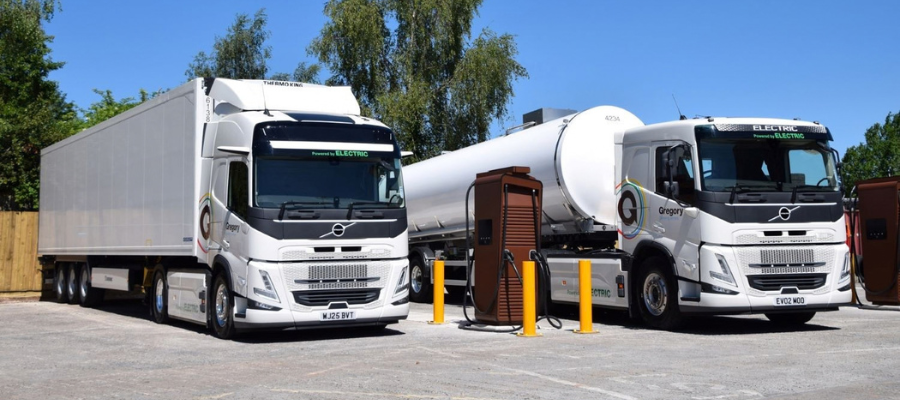
Electrification of vehicle fleets is another key strategy in sustainable logistics. Fully electric and hybrid vehicles reduce local emissions and contribute to long-term decarbonisation goals. Retailers and logistics partners are increasingly working with electric-ready carriers to prepare for full deployment through schemes like the National Sustainable Infrastructure (NSI) programme.
As of 2024, electric vehicles (EVs) accounted for only 1.4% of the UK’s total commercial vehicle fleet. While the number of electric commercial vehicles is growing rapidly (a 31% increase from 2023 to 2024), overall adoption remains low due to challenges such as high upfront costs, limited charging infrastructure and range limitation for heavier vehicles. In the meantime, hydrotreated vegetable oil (HVO) offers a practical near-term solution. Produced from vegetable oils or animal fats, HVO is a renewable diesel that can replace conventional fuel without engine modification. At ReBound, we’ve seen HVO reduce emissions by up to 89% per kilometre.
Challenges remain with HVO, including limited supply and higher costs compared with fossil fuels. A way to mitigate this is by using dedicated sustainability budgets or impact funds to offset these costs. Phased regional rollouts, focusing on depots or routes with the highest emissions, provide a pragmatic approach while ensuring supply reliability.
Maximising truck capacity
Another effective method to lower emissions per parcel is improving vehicle utilisation. Filling trucks to their maximum capacity reduces the number of vehicles on the road, cuts emissions, and enhances operational efficiency. In the UK, we use loose loading – removing pallets to fit more boxes on a trailer.
Predictive data plays a critical role in optimising load capacity. At ReBound, we use historical insights from previous peak seasons to help anticipate where additional capacity is required, while carrier partnerships enable shared capacity and route consolidation. By aligning forecasts with operational planning, retailers can balance service speed with environmental efficiency, ensuring more parcels travel in fewer vehicles.
Technology and data for sustainable logistics
Digital tools are increasingly becoming central to green logistics. One innovative option is carbon measurement dashboards, such as the one we use at ReBound Returns, which provides transparency for every parcel managed. This allows retailers to track emissions by carrier and country, helping them make data-driven decisions to reduce environmental impact.
Technology also supports circular logistics. By directing unwanted returns to sustainable destinations rather than defaulting to retailer warehouses, logistics providers can integrate recycling and refurbishment options, further reducing the carbon footprint associated with returns. For example, at ReBound Returns we have partnered with repair organizations like United Repair Centre and recycling organisations like ESO Recycling along with numerous other circular partnerships. This allows returns to be directed to sustainable solutions along the return journey, instead of being returned back to the retailer first.
These initiatives give retailers visibility and control over the emissions generated in their operations, using technology and logistics strategy can drive measurable environmental improvements.
Real-world impact
The effectiveness of these measures is already undeniable. At ReBound Returns, where we handle millions of parcels every peak season, we achieved a 23% reduction in average carbon emissions per parcel during the 2023-24 peak period compared with the previous year. Our targeted sustainability measures such as greener transport modes, improved route planning, fuller truck loads, and carbon offsetting programmes really have made a tangible difference.
A greener peak period
Returns are an unavoidable aspect of retail, especially after the high-demand Golden Quarter, but they need not carry a high carbon cost. Through rail transport, greener fleets, load optimisation, and data-driven planning, retailers can significantly reduce emissions per parcel during peak periods.
The sector has a unique opportunity to address a growing environmental challenge by integrating sustainable logistics into standard operations. With technology and collaborative logistics networks, retailers gain control over every stage of the returns process, creating a more circular and responsible approach. As practices continue to evolve, the retail industry can set a global example for combining commercial efficiency with sustainability.
More Green Miles - Industry Insight Articles






Related Pages
Check out more news and media
Discover More

Become a Member
Our membership packages provide you with the tools to keep your operation safe, efficient and compliant.
Learn more

Press Releases
Latest updates, insights, and expert commentary shaping the future of logistics, transport, and supply chains across the UK.
Learn more

Services
Discover the full range of services from Logistics UK, designed to keep your operation safe, efficient, and compliant.
Services

Events
Discover upcoming Logistics UK events designed to bring industry leaders, policymakers, and businesses together.
Events
Stay Ahead. Stay Compliant. Stay Connected.
Join thousands of logistics professionals using Logistics UK to navigate industry change with confidence.
Join Us