














Wellness with Rona… (Deputy Director of Comms)
THRIVE is a resource designed primarily for our members and the wider industry, providing access to a wide range of materials, articles and practical tools that can be shared and distributed across their teams.
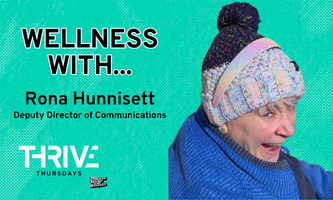
Wellness with Rona (Deputy Director of Comms)
What first inspired you to start beach cleaning?
When we moved to live by the coast, I was appalled by the amount of rubbish that people drop when they visit the beach – I can see it from my kitchen window and it makes me mad! When you think that 80% of what ends up in the sea starts on the land, it’s up to all of us to do our part and stop it ending up in there in the first place!
Do you do it on your own, or with other people / as part of a group?
I often do a quick beach clean at lunchtime when I’m working from home as it gets me out of the house, but the main activity I’m involved with is running a group of like-minded volunteers here on the South Coast, who do a large organised clean once a month across three beaches between Brighton and Newhaven. We rotate between the three which means that each one gets a really thorough clean once a quarter.
What beaches do you help clean and how often do you do this?
We clean at Ovingdean, Rottingdean and Saltdean here in East Sussex, and are often asked to join up with other groups along the coast when there is an issue – for example, a couple of months ago, Southern Water accidentally released millions of microplastic pieces at Camber Sands, so we went along to help with the clean up.
I’ve also been nominated as a Litter Hero Ambassador by Keep Britain Tidy, and use my CSR days doing talks for schools and groups like scouts and Brownies to show the dangers posed to the natural world by littering.
What kinds of litter do you come across most often?
It can range from the very large – a shipping container and we regularly find fishing buoys – to the very small – tiny pieces of plastic which are the result of rubbish being in the sea for a long time and breaking up in the waves. Sadly, the vast majority of what we find is stuff that people have knowingly discarded because they can’t be bothered to find a bin – things like drinks bottles, sandwich wrappers and crisp packets – which is heartbreaking when you realise that there is a bin every 100m along this stretch of coast!
What’s the most unusual or surprising thing you’ve ever found?
We regularly find underwear – there are a lot of people who go home from the beach in a very “breezy” fashion – but I’d say the most peculiar thing I’ve found is two pairs of false teeth! I’ve also found several plastic soldiers, which are the “holy grail” as far as beach cleaners are concerned – strange but true. They have pride of place on my kitchen windowsill!
What tools do you use to help beach clean?
You need sturdy footwear (our beaches are pebbles but it is a good idea for sandy beaches too) to ensure you don’t stand on anything untoward like glass or needles – visitors frequently bury disposable barbecues on the beach, which can be dangerous, plus a good pair of gloves and a bag. Lots of our group use litter pickers but I prefer to pick up with my hands (in gloves) as you can get a better grip on items, particularly small items. I always try to recycle as much of what I find as possible, as most of the items that are left on the beach can go into household bins, rather than just being sent to landfill.
How does beach cleaning help your mental health?
Being outside in the fresh air always makes me feel better, and I find being so close to nature a real pick me up. We have lots of wildlife off our coastline here, so I’m always looking out for our local seal, who comes onto the beaches quite regularly, and there’s always the thrill of potentially spotting dolphins – it doesn’t happen often, but when it does it’s a real boost.
When I’m focusing on finding litter in amongst the pebbles and seaweed, it helps me switch off from other things, and of course there’s also the feel-good factor that you get from doing something positive for the natural environment. I always come home feeling like I’ve done some good and I find the ozone works wonders for my mind, even when it’s raining!
Would you recommend others take up beach cleaning, and if so, why? Are there any tips you’d give to someone looking to start beach cleaning?
Beach cleaning is addictive: it’s a great way to get some exercise in the fresh air (it can be quite strenuous moving large lumps of plastic and fishing rope around!) and you really feel like you’re making a difference. I’d definitely recommend giving it a try – every tiny piece of litter removed from the beach is rubbish that isn’t going into the water to be eaten by fish and other wildlife. There’s a great initiative to try next time you’re on the beach called Take Three for the Sea. Simply look for and remove three pieces of litter and take them to a bin (or take them home to dispose of) – trust me, you won’t be able to stop at three! You can even do it in your street or in the countryside: whatever stops litter impacting wildlife and getting into the food chain is worth the effort, and if we all did it, just think about how much cleaner the world would be.
Check out the Marine Conservation Society’s website for information about their work and groups in your area: www.mcsuk.org or just head outside: you’ll soon find that people talk to you on the beach!