













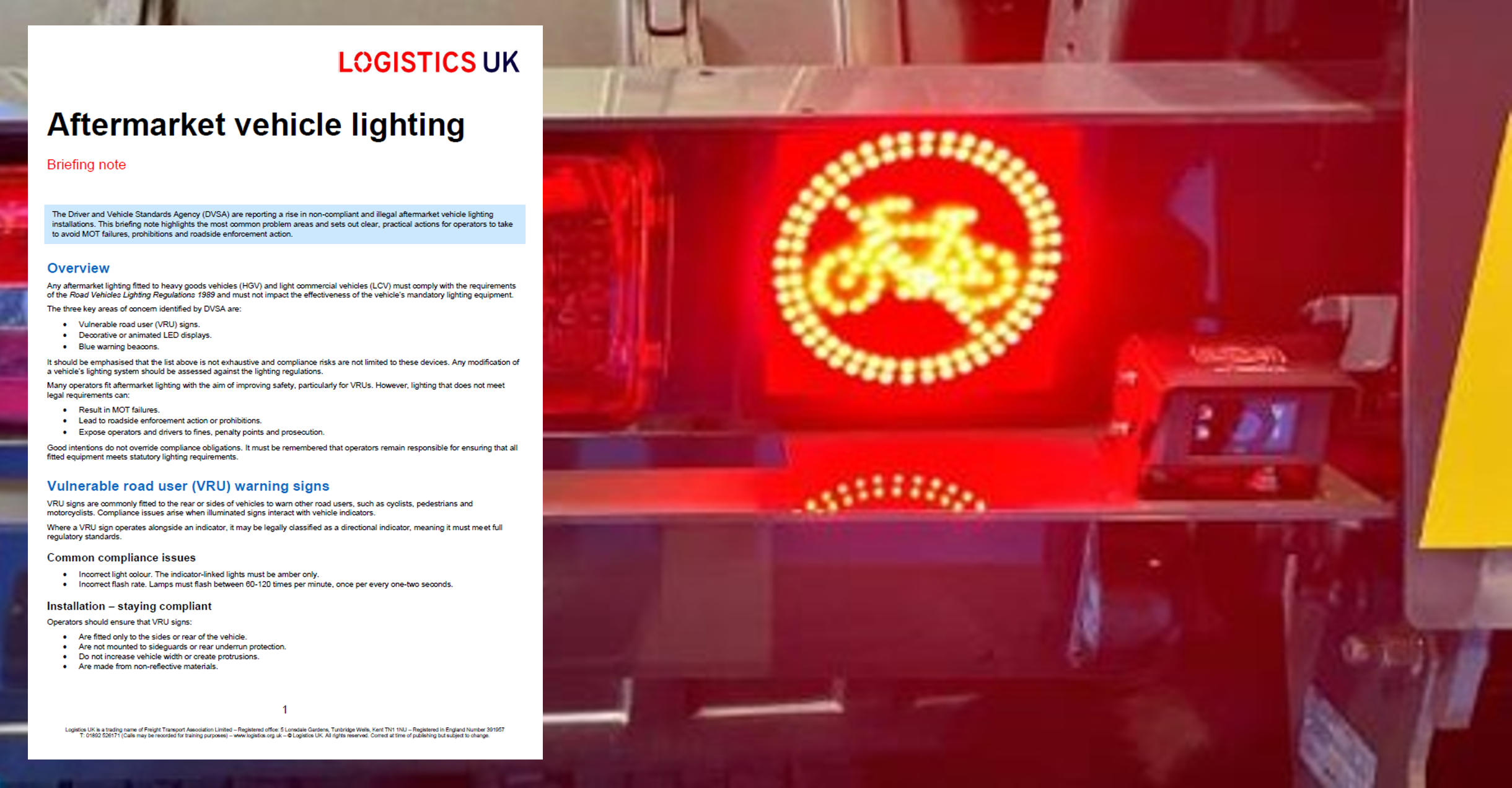
The Driver and Vehicle Standards Agency (DVSA) are reporting a rise in non-compliant and illegal aftermarket vehicle lighting installations. This briefing note highlights the most common problem areas and sets out clear, practical actions for operators to take to avoid MOT failures, prohibitions and roadside enforcement action.

Information & Resources
Briefing Notes
Looking for information or advice? Logistics UK produces member briefing notes on all topics within logistics. Find them listed here.
Decarbonisation-related grants and funds
The UK government has legislated for the country to be a net zero economy by 2050. Currently, the transport sector is responsible for the largest share of UK emissions at 37.1%. This briefing note looks at the various grants and funds available to operators of alternatively fuelled vehicles.

Carriage of UN1361 CARBON (PGIII)
1 January 2026 saw new rules on the carriage of charcoal by sea introduced into the International Maritime Dangerous Goods (IMDG) code. Amendment 42-24, Special Provisions 223 and 925 are no longer applicable to the carriage of charcoal cargo.
This change can lead to confusion over markings on multimodal journeys. This briefing note explains details of the changes and includes a statement template to provide clarity on any marking misunderstandings.
Euro 7 – emissions reduction technologies for on-road transport
This briefing note summarises current and emerging technologies designed to reduce PM emissions from road transport, including brakes, tyres, on board capture systems, exhaust controls and roadside technologies. It also includes key cross cutting issues relating to EV battery weight, the limits this imposes on regenerative braking and the way in which Euro 7 standards will apply to EVs.

EU proposal amending vehicle regulations – Implications for Northern Ireland
An announcement from the Department of Transport (DfT) on 19 March 2026 revealed the European Commission has proposed amendments to several vehicle-related EU Regulations, which fall within scope of the Windsor Framework and will therefore apply directly in Northern Ireland.
Analogue Tachographs
This briefing note will cover the use and responsibilities of those operating vehicles fitted with analogue tachographs.

Use Of Mobile Phones Whilst Driving
In March 2022 the law changed on driving whilst using a mobile phone to incorporate almost all uses of the device, this will have effect in England, Scotland and Wales. This briefing note examines the changes, exemptions and explains the offences and penalties for drivers and employers. It also offers guidance for employers to help draw up a policy on the use of mobile phones in company vehicles.

Clean Air Zone briefing note
This briefing note covers the Clean Air Zones across Great Britain.
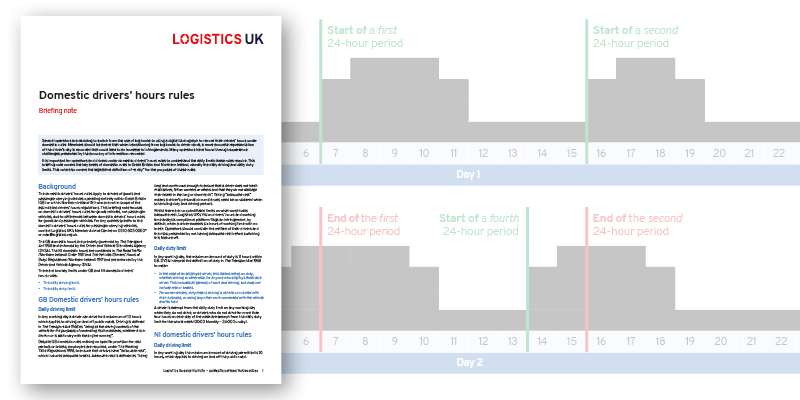
Domestic drivers hours rules
It is important for operators and drivers under domestic drivers’ hours rules to understand the daily limits these rules require. This briefing note covers the key areas of domestic rules in Great Britain and Northern Ireland, namely the daily driving and daily duty limits. This note also covers the legislative definition of “a day” for the purposes of these rules.

Entry & Exit Scheme
Originally planned for an October 2024 introduction, the EU Entry and Exit System (EES) is expected to begin implementation on 12 October 2025. EES will be introduced in phases with full implementation complete by April 2026. This briefing note provides an overview of the new requirements and detailed frequently asked questions supporting those travelling on international journeys.

Carriage Of Lithium Batteries
As an increasing number of items containing lithium batteries brings more operators under the scope of the new requirements, this briefing note aims to assist operators who do not regularly carry dangerous goods in identifying the actions required to transport these items in accordance with the ADR and IMDG regulations.
Winter Gritting Domestic Drivers' Hours – Emergencies
This briefing note provides guidance on how the emergency exemption under domestic drivers’ hours legislation can be used.
Refuse Collection Derogation
This briefing note aims to summarise the characteristics required to operate out of scope of EU drivers’ hours rules in relation to the derogation for vehicles used in connection with refuse collection and disposal.
Alternatively fuelled and zero emission vehicles
The following briefing highlights the rules and regulations surrounding the use of alternatively fuelled vehicles (AFV) and zero emission vehicles (ZEV), between 3.5t and 4.25t maximum authorised mass (MAM), as a result of the changes introduced by The Motor Vehicles (Driving Licences) (Amendment) (No. 2) Regulations 2025.
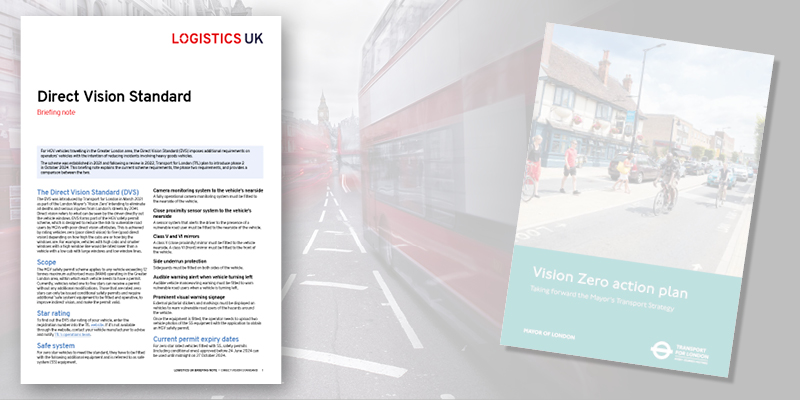
Direct Vision Standard Briefing Note
This latest briefing note on the Direct Vision Standard explains the current scheme requirements, the phase two requirements, and provides a comparison between the two.
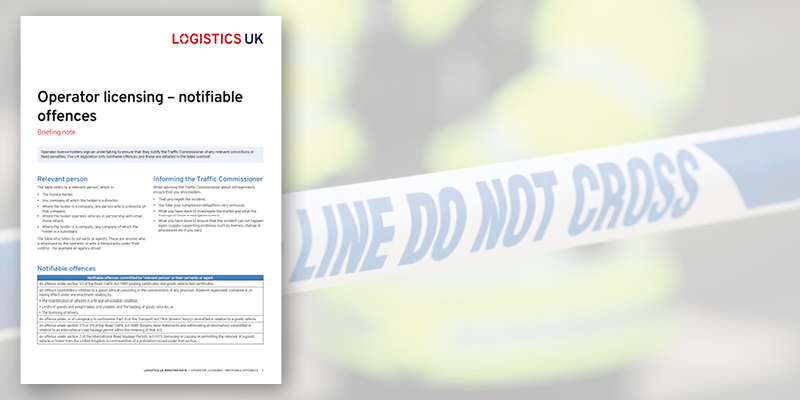
Operator Licensing – Notifiable Offences and Template Letter
Operator licence holders sign an undertaking to ensure that they notify the Traffic Commissioner of any relevant convictions or fixed penalties. The UK legislation lists notifiable offences and these are detailed in the briefing note, which also includes a template notification letter to assist in the event of an offence being committed.
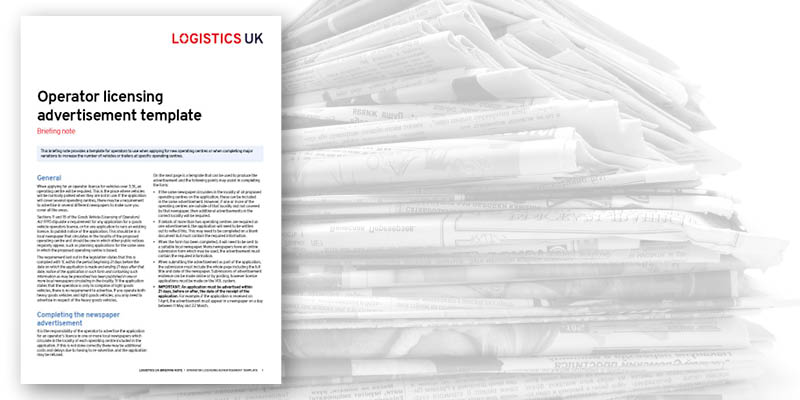
Operator licensing advertisement
This briefing note provides a template for operators in Great Britain to use when applying for new operating centres or major variations at specific operating centres.
Northern Ireland Operator Licence Advert Template
This briefing note provides a template for operators in Northern Ireland to use when applying for new operating centres or major variations at specific operating centres.
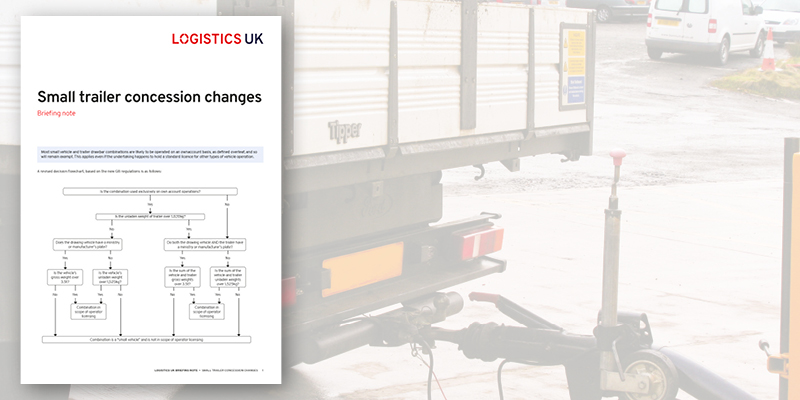
Small Trailer Concession
A briefing note examining the small trailer concession from operator licensing.

Maintenance Agreements Briefing Note
This briefing note summarises maintenance agreements and includes a model agreement between an operator and a maintenance provider for safety inspections and/or the repair of vehicles and trailers subject to operator licensing.
Vehicles Used In Connection With Public Services
This briefing note aims to highlight the key decision areas for managers deciding whether vehicles used for utility and public body/public interest operations are in or out of scope of the EU drivers’ hours rules, and in particular the issuing of interpreting the term ‘vehicles used in connection with’ in relation to one specific concession.
Smart Tachograph 2
This briefing note explains the systems and features of the new smart tachograph unit and the challenges being encountered with the implementation process. The information is correct at the time of writing but subject to change.
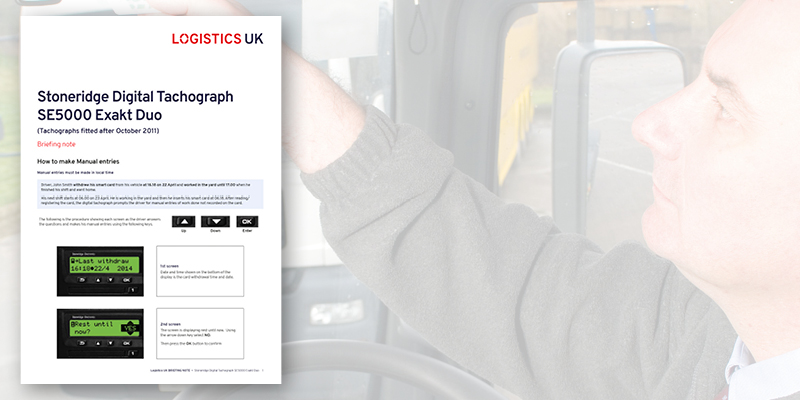
Stoneridge Digital Tachograph Manual Entry Guide
A guide on how to make manual entries on Stoneridge SE5000 tachographs
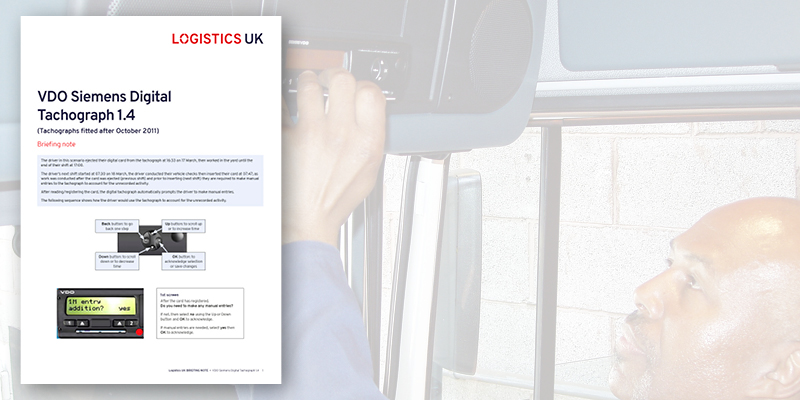
VDO Siemens Digital Tachograph 1.4
A guide on sequences a driver should follow to account for unrecorded activity.

Working Time Agreements
This briefing note summarises workforce/collective agreements and includes a template agreement Logistics UK members can tailor to their needs.

Road Transport Directive Volunteering and Declaring Other Work
This briefing note provides a template for operators to ensure that any other work undertaken by drivers is captured and included as part of the Road Transport (Working Time) Regulations 2005. This may also include volunteering in certain cases.
Working Time Compensating Absences
This briefing note aims to explain which absences need to be compensated in working time calculations and how much time should be added.
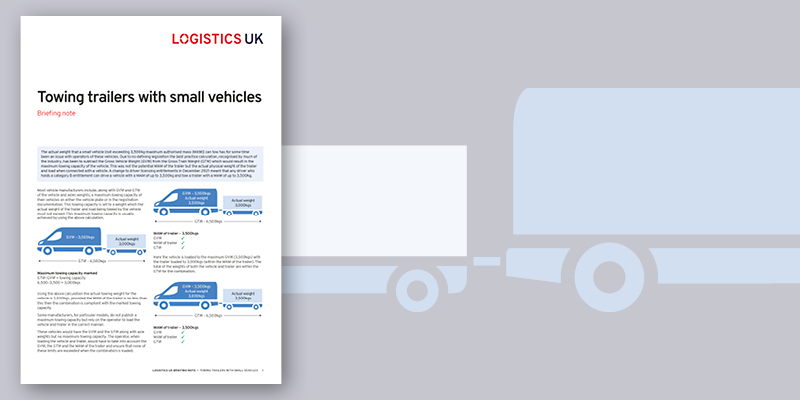
Towing Trailers With Small Vehicles
The actual weight that a small vehicle (not exceeding 3,500kg maximum authorised mass (MAM) can tow has for some time been an issue with operators of these vehicles. Due to no defining legislation the best practice calculation, recognised by much of the industry, has been to subtract the Gross Vehicle Weight (GVW) from the Gross Train Weight (GTW) which would result in the maximum towing capacity of the vehicle.
Checking driver licences
This briefing note provides a checklist to assist operators when checking driver licences, and an example of a driver’s declaration.

Eyesight Standards For Drivers In The UK
This briefing note confirms the minimum eyesight standards required for driving in the United Kingdom.
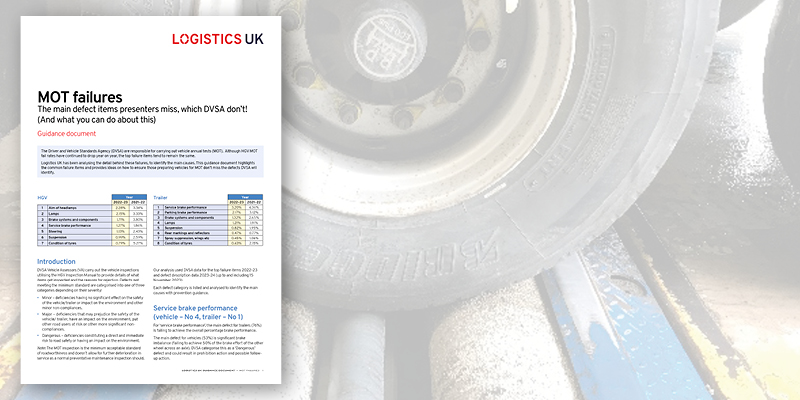
MOT Failures
Although HGV MOT fail rates have continued to drop year on year, the top failure items tend to remain the same. Logistics UK have been analysing the detail behind these failures, to identify the main causes. This guidance document highlights the common failure items and provides ideas on how to ensure those preparing vehicles for MOT don’t miss the defects DVSA will identify.
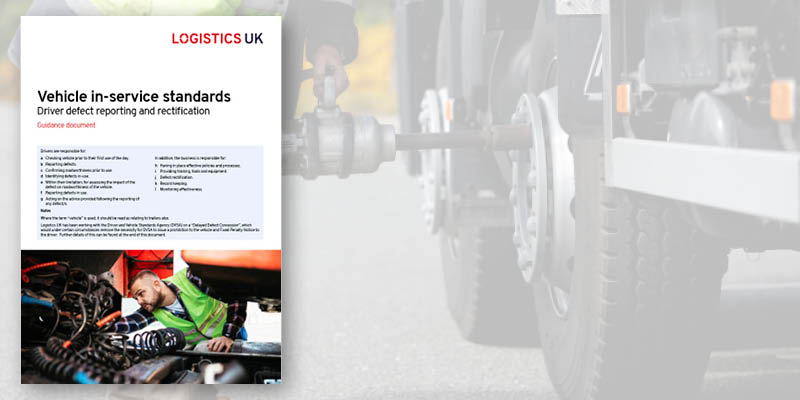
Vehicle in-service standards
A guidance document on driver defect reporting and rectification

Tyre Husbandry
With so much focus being placed on tyres condition, Logistics UK has developed some simple tips on how to check tyres to keep your Heavy Goods Vehicles and Trailers safe and drivers/operators compliant.
ABS Malfunction Indicator Lamps
This briefing note outlines recommended procedures for operators and drivers to follow should ABS Malfunction Indicator Lamps become illuminated during a journey.
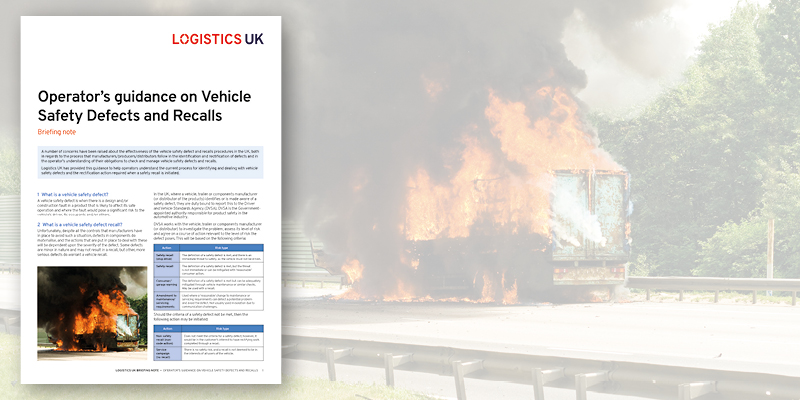
Operator's guidance of Vehicle Safety Defects and Recalls
A numbers of concerns have been raised about the effectiveness of the vehicle safety defects and recalls procedures in the UK, both in regards to the process that manufacturers/producers/distributors follow in the identification and rectification of defects and in the operator’s understanding of their obligations to check and manage vehicle safety defects and recalls.
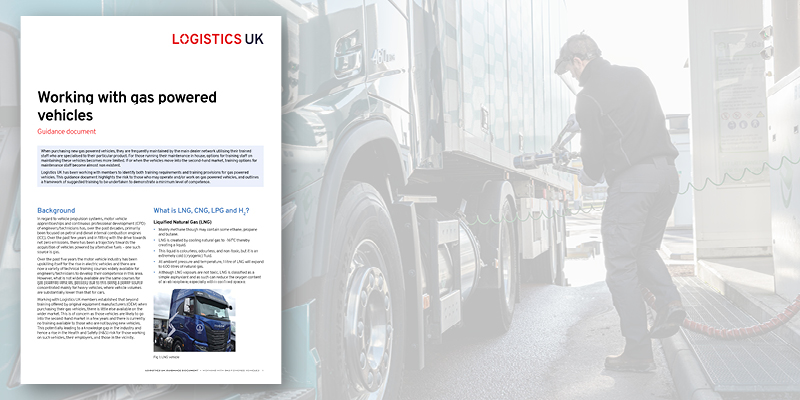
Working with Gas Powered Vehicles
Logistics UK has been working with members to identify both training requirements and training provisions for gas powered vehicles. This guidance document highlights the risk to those who may operate and/or work on gas powered vehicles, and outlines a framework of suggested training to be undertaken to demonstrate a minimum level of competence.
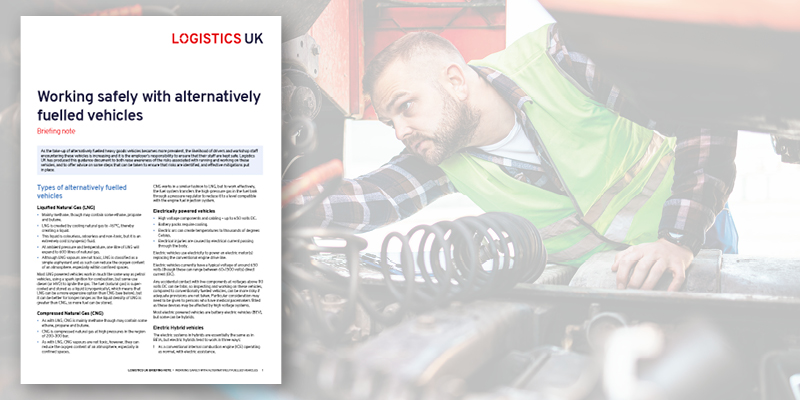
Working Safely With Alternatively Fuelled Vehicles
Logistics UK have produced this briefing note to both raise awareness of the risks associated with running and working on these vehicles, and to offer advice on some steps that can be taken to ensure that risks are identified, and effective mitigations put in place.
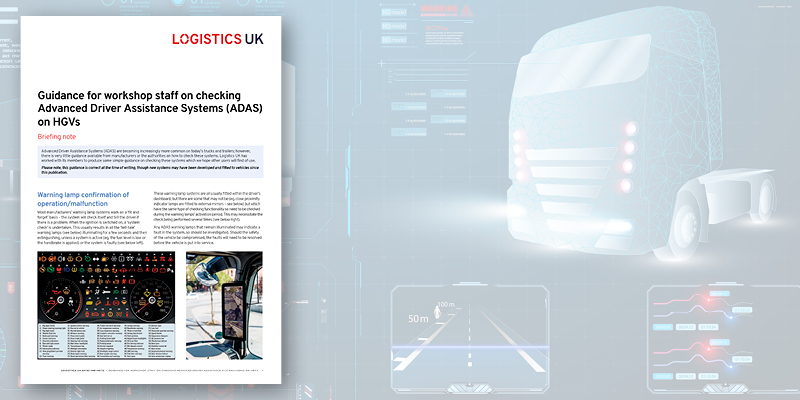
Guidance for workshop staff on checking Advanced Driver Assistance Systems (ADAS) on HGVs
Advanced Driver Assistance Systems (ADAS) are becoming increasingly more common on today’s trucks and trailers; however, there is very little guidance available from manufacturers or the authorities on how to check these systems. Logistics UK has worked with its members to produce some simple guidance on checking these systems which we hope other users will find of use.
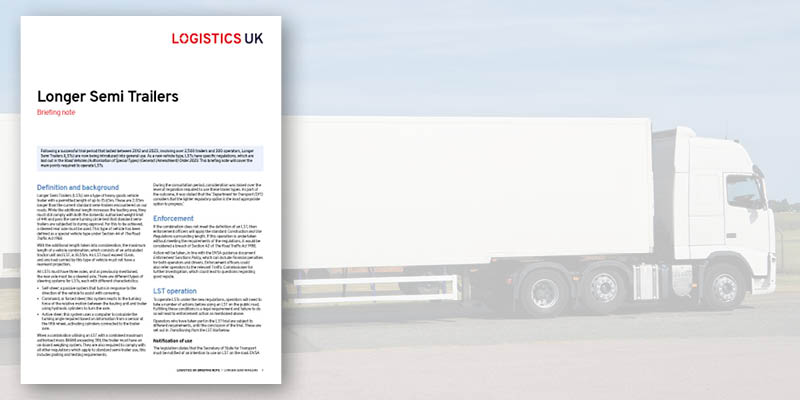
Longer Semi Trailers
A briefing note summarising the specific regulations required to operate longer semi trailers, which have been introduced into general use.
Scotland Parking Prohibitions
At the end of 2023 new parking rules came into effect in Scotland. Local Authorities and Police Scotland have the powers to enforce the new legislation. This briefing note explores the new requirements, who it applies to and what it means to the logistics sector.
Low Carbon Fuels
Low carbon fuels can be used as a replacement fossil fuel and provide significant greenhouse gas (GHG) emission savings. However, they are not zero emission at the tail-pipe which has led to uncertainty for vehicle operators about their long term use as a transport fuel. With even stricter emissions reporting rules now required for some companies, there is considerable interest from operators, despite the higher cost of these types of fuels compared to conventional fossil fuels.
ADR 2025 Updates
Every two years the ADR regulations are updated and 2025 is a change year. This briefing note summarises the main changes in ADR 2025.
Carriage of fireworks
This briefing note is specifically aimed at the carriers who only occasionally are asked to deliver a consignment of fireworks, or to include some fireworks within a mixed load of other items.
Carriage Of Dangerous Goods Packed In Limited Quantities By Road & Sea
The carriage of dangerous goods clearly needs rules and regulations to ensure that these goods are transported safely. When carrying larger quantities of most hazardous goods there will be requirements for every aspect of the carriage. from the vehicle, the containers or packages, the driver and any crew and any documentation, all of these will need to meet set standards in order to make the transport operation legal, compliant and, above all, safe.
Section 19 & 22 Permits
This briefing note examines several areas where industry-established understanding of the legal situation has been revisited, including whether a not-for-profit organisation can continue to use the permit system, drivers’ hours, and Driver Certificate of Professional Competence (CPC).
Lorry Driver Overnight Subsistence Allowance
A change introduced by HMRC in April 2017, with regard to the lorry driver overnight subsistence allowance requires the operator to apply for an approval notice to continue to be able to pay the driver this subsistence.