









Nothing moves without logistics
Nothing moves without logistics, including the defence industry
From powering growth and delivering green prosperity to our national security, every part of the UK economy depends on logistics. To make a success of the Modern Industrial Strategy, including for the defence industry, we must work together to make the UK’s logistics system as efficient and resilient as possible.
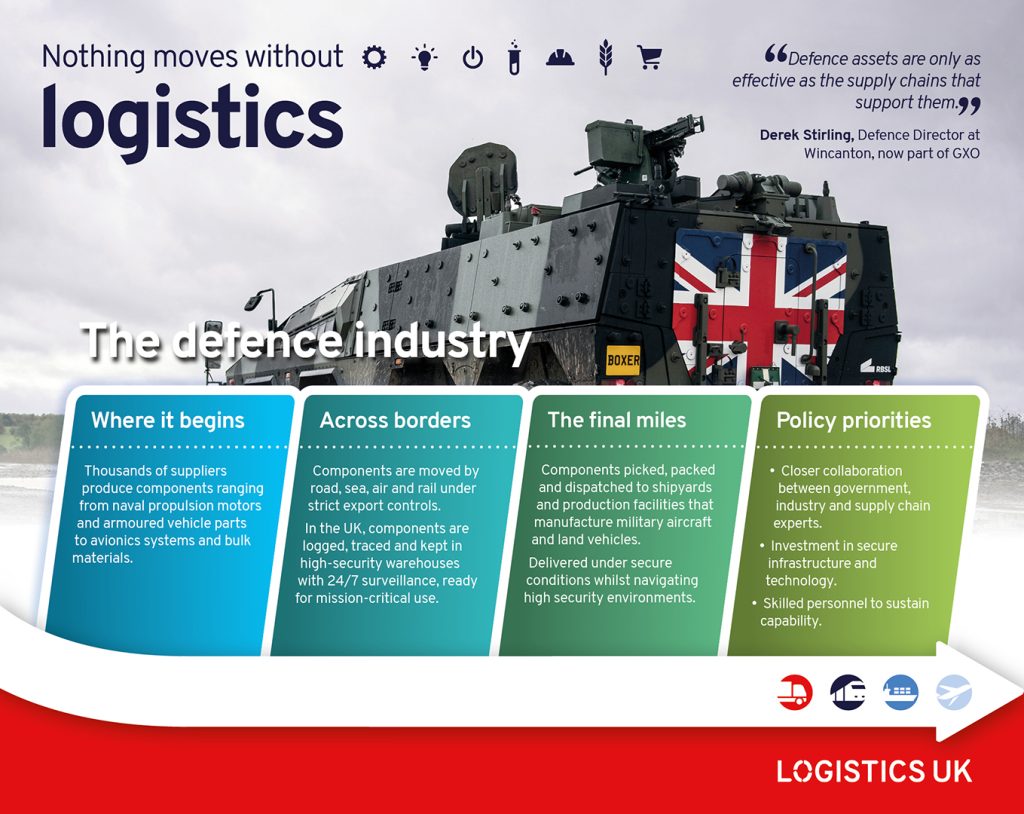
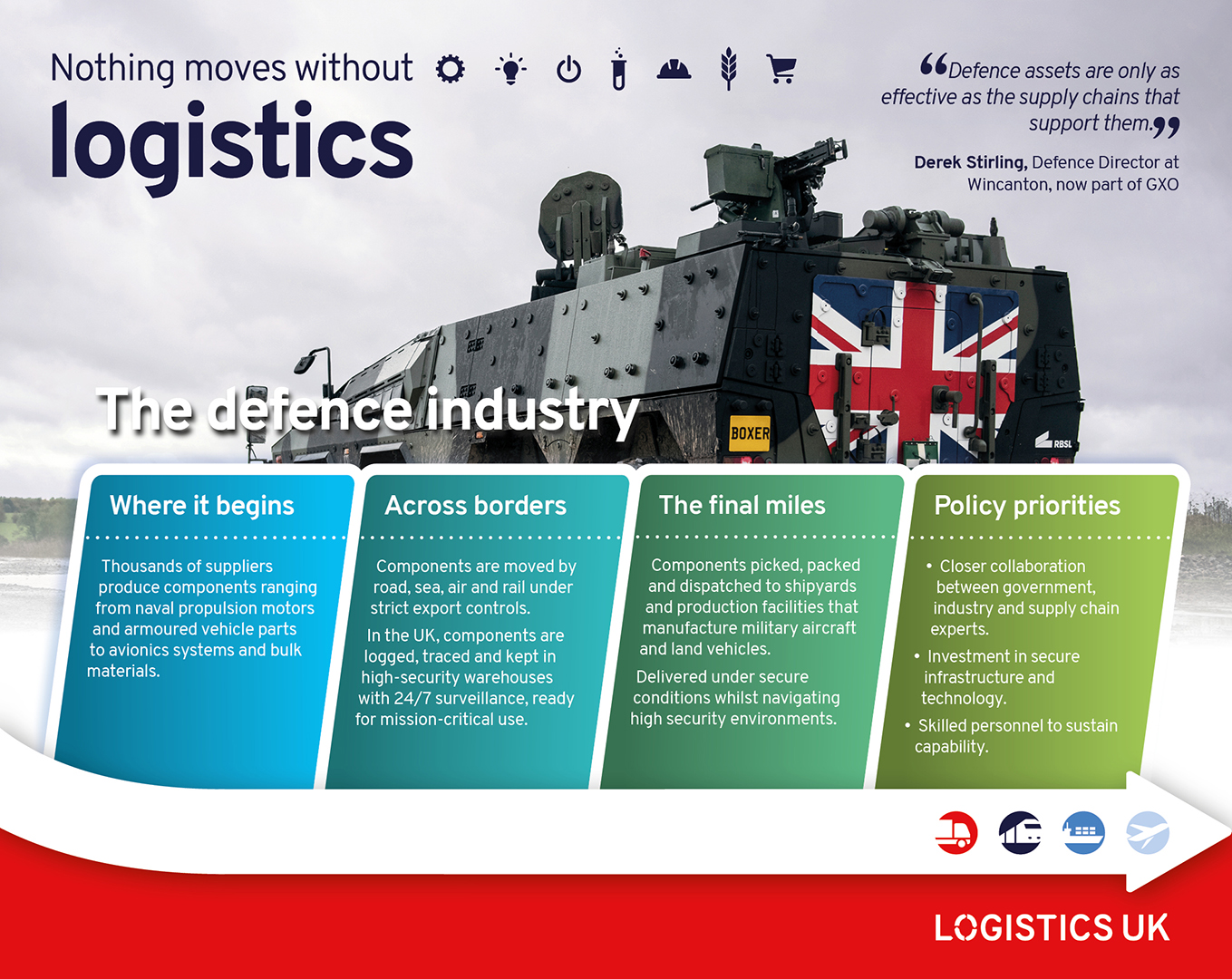
UK defence manufacturing relies on highly secure, carefully planned logistics chains that ensure sensitive and mission-critical assets arrive safely, on time, and in the right condition. From naval propulsion motors and armoured vehicle components to avionics systems and bulk materials, every stage of the defence supply chain depends on logistics precision.
“Defence assets are only as effective as the supply chains that support them. Embedding logistics into programme planning from the outset, rather than treating it as a downstream consideration, would significantly improve efficiency, reduce costs and enhance operational readiness.” Derek Stirling, Defence Director at Wincanton, now part of GXO.
From manufacturer to storage
Defence components are sourced globally: from UK-based suppliers, specialist manufacturers across Europe, and trusted partners around the world. These supply chains must handle complex import processes, strict export controls, and multimodal transport – all while maintaining compliance with stringent security regimes.
On arrival, components are moved under secure and monitored conditions, often through MOD-approved corridors. At facilities such as those operated by Wincanton, now part of GXO, items are given a licence plate number (LPN) and placed under its custodianship until required for assembly. High-security warehouses with 24/7 monitoring, access controls and traceability systems safeguard high value inventory that is critical to the manufacturing process.
Precision delivery to the production line
When a customer issues a demand request through the warehouse management system, logistics takes over to ensure delivery exactly in line with build schedules. Bulk materials such as raw plate and pipe are collected from suppliers and delivered into the manufacturing site, which can be the build line for aircraft and land vehicles or naval shipyards.
Mission-critical items are dispatched with specialist handling and packing solutions to provide care and protection of inventory that must meet specific standards to be fitted into the final asset.
The critical final miles
Defence logistics involves more than transport. It means navigating access-controlled military zones, moving outsized components by heavy haulage, and operating under strict compliance with weight, routing and security requirements. Moves may require police escort or high security transport, depending on sensitivity.
“From oversized naval components to sensitive air systems, we use specialist handling, packing and transport solutions to protect against damage and ensure compliance. Programme success is based on achieving milestones and logistics absolutely underpins that schedule adherence,” says Derek Stirling.
Why this matters for resilience and security
Defence logistics is about more than efficiency – it is about resilience, compliance, and national security. Assets are only mission-ready if the supply chains behind them are functioning. That requires contingency planning, diversified transport modes, and digital visibility across the entire network. The stakes are high.
Defence logistics also demands highly skilled personnel: multi-skilled operatives trained in inventory control, material management, and quality assurance, many requiring advanced security clearance which can take up to 12 weeks to obtain. This limited talent pipeline makes recruitment and retention a challenge – but without it, defence projects cannot move forward.
Conclusion
The UK’s defence programmes – from the Queen Elizabeth-class carriers to the Typhoon and F-35 fighter jets – only succeed when logistics succeeds. Every secure delivery, every precision-timed assembly, every compliance regime met helps deepen national security.
In short, nothing moves without logistics, including the defence industry.
Policy priorities to enable the logistics sector to boost defence manufacturing
- Closer collaboration between government, industry and supply chain experts.
- Investment in secure infrastructure and technology.
- Skilled personnel to sustain capability.