







Nothing moves without logistics
Nothing moves without logistics, including the creative industries
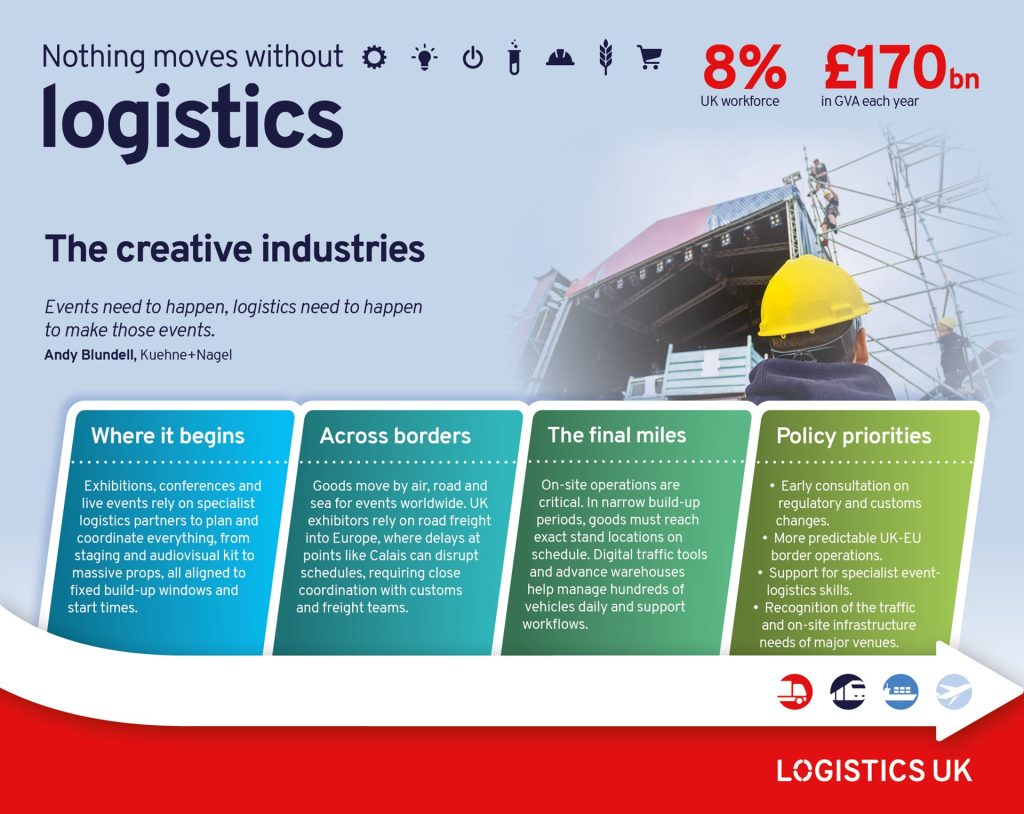
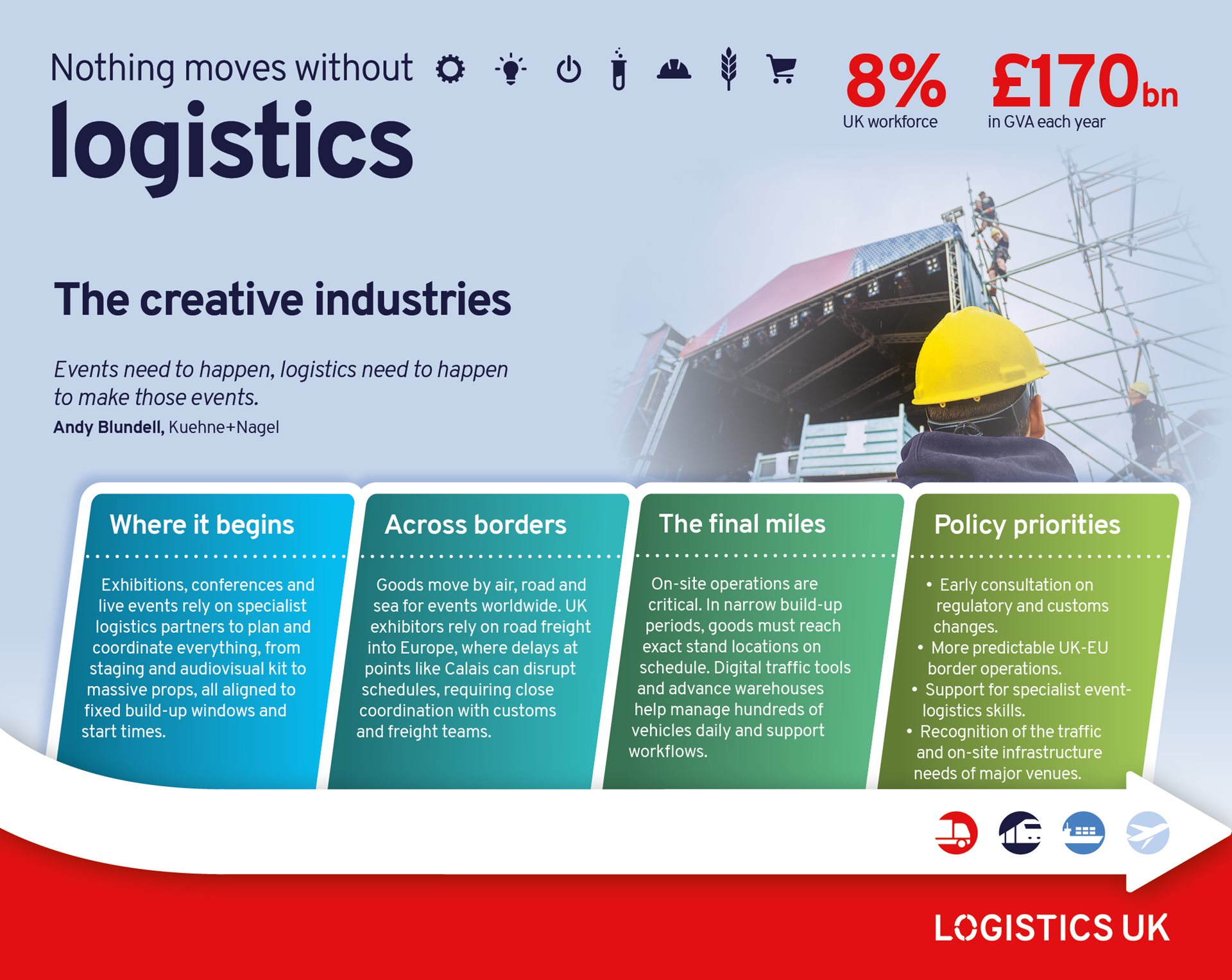
The UK’s creative and events industries depend on specialised, time-critical logistics. From single-hall exhibitions at the NEC and major shows filling ExCeL London or large German Messe venues, to global sporting events such as the Commonwealth Games, Olympics and Football World Cups, logistics providers ensure that equipment, displays and staging arrive exactly when required. Every event has an immovable start date: build-up and breakdown periods must run precisely, and success depends on goods reaching the right location at the right time.
Kuehne+Nagel is one of the official logistics partners that support exhibitions, conferences and major sporting events. As Andy Blundell explains: “Events need to happen, logistics need to happen to make those events.”
Multimodal movements and diverse products
Creative and event logistics is inherently multimodal. Goods move by air when deadlines are tight, by road for most European movements, and by sea where timelines allow. Kuehne+Nagel supports a wide range of customers, including exhibitors, sponsors, stand builders and organising committees – with timelines and requirements that vary by organisation.
The products moved for events span a remarkable range. Blundell notes: “We’ve moved tanks, military aircraft and satellites, and at the same time refrigerators and microwaves for a consumer event.”
Events teams work backwards from fixed opening dates, selecting the transport mode that meets cost and time requirements. After an event closes, equipment either returns to origin or moves rapidly onto the next event, sometimes within one to two weeks.
On-site logistics
Unlike many other sectors, creative logistics includes a major on-site component: the delivery of goods to the precise stand location, at a scheduled time, during a narrow build-up window. This unseen work is fundamental to keeping events on track.
Blundell notes: “All the event items need to arrive, be set up and in place during this bump-in period… There’s a there’s a buzz within event logistics. You’ve got that day, it’s fast paced, it’s slick. There’s lots of things going on, there’s lots of complexity to deal with.”
At a recent Excel London event, handling 200–300 vehicles per day required digital booking systems, traffic management, on-site warehousing and carefully sequenced deliveries to prevent congestion spilling onto local roads. Forklifts, drivers, warehouse teams and stand builders rely on this choreography to keep build-up moving.
Advance warehouses and specialist workflows
Most major events use advance warehouses – often temporary facilities on the event site – where goods are received, stored, tracked and released to stand locations when needed. Integrated digital systems link these warehouses with global air, sea and road freight operations, giving customers visibility throughout.
There is also a unique task known as empty case storage. “Everyone arrives, unpacks… and then there’s a massively high volume of empty crates,” Blundell explains. These are stored until breakdown and returned to customers for repacking.
Border crossings and resilience
Creative industries logistics is international. Major events are held across Europe, Asia, the Middle East and the US. For UK-based operators, road freight into Europe is essential – and vulnerable to disruption.
Blundell is clear that any delay at the border can derail an entire event schedule: “Any impacts at the crossing severely impact our industry… if they’re sitting in long queues due to strikes at Calais, we’re severely impacted.”
Resilience depends on close coordination between customs, road, air and sea teams; careful monitoring of disruptions; and planning buffer time wherever possible. But these pressures mean border processes and regulatory changes require careful policy consideration.
Skills and workforce
Event logistics is intensely specialist. Teams need logistics knowledge, project management capability, resilience and the ability to solve problems on site, under pressure.
Blundell describes the skill set: “Working in event logistics, you need [resilience] in an abundance.”
Even though events logistics is at the more high-profile end of the industry, recruitment remains challenging. “Even if we’re saying, well, you could travel to great destinations and work on high-profile events, we still struggle to recruit,” he adds.
Building a pipeline of talent is essential to supporting the growth of the creative industries.
Investment and innovation
Event logistics sits at the forefront of innovation. Firms are investing in:
- Integrated digital ecosystems linking global freight to on-site operations.
- Digital traffic-management tools.
- EV trucks and HVO-powered forklifts.
- Emerging digital ATA carnets to simplify temporary imports.
These tools improve efficiency, reduce emissions and enhance resilience, and the industry is continuing to adopt them.
Conclusion
Creative industries rely on logistics at every step: multimodal transport, on-site coordination, advance warehousing, skills, digital systems and resilient borders. None of the UK’s exhibitions, festivals, cultural showcases or global events can happen without it.
In short: nothing moves without logistics, including the creative industries.
Policy priorities to enable the logistics sector to boost the creative industries:
- Early consultation with the event logistics industry on any policy, customs, import/export or regulatory changes that affect crossings or timeframes.
- Predictable UK–EU border operations for road freight, to prevent delays that disrupt time-critical event schedules.
- Recognition of the specialist skills required in event logistics, and support for training and development for new entrants to the sector.
- Support for traffic management and on-site operational needs at major venues, where high volumes of vehicles require coordinated scheduling and safe, regulated handling.